 By
By
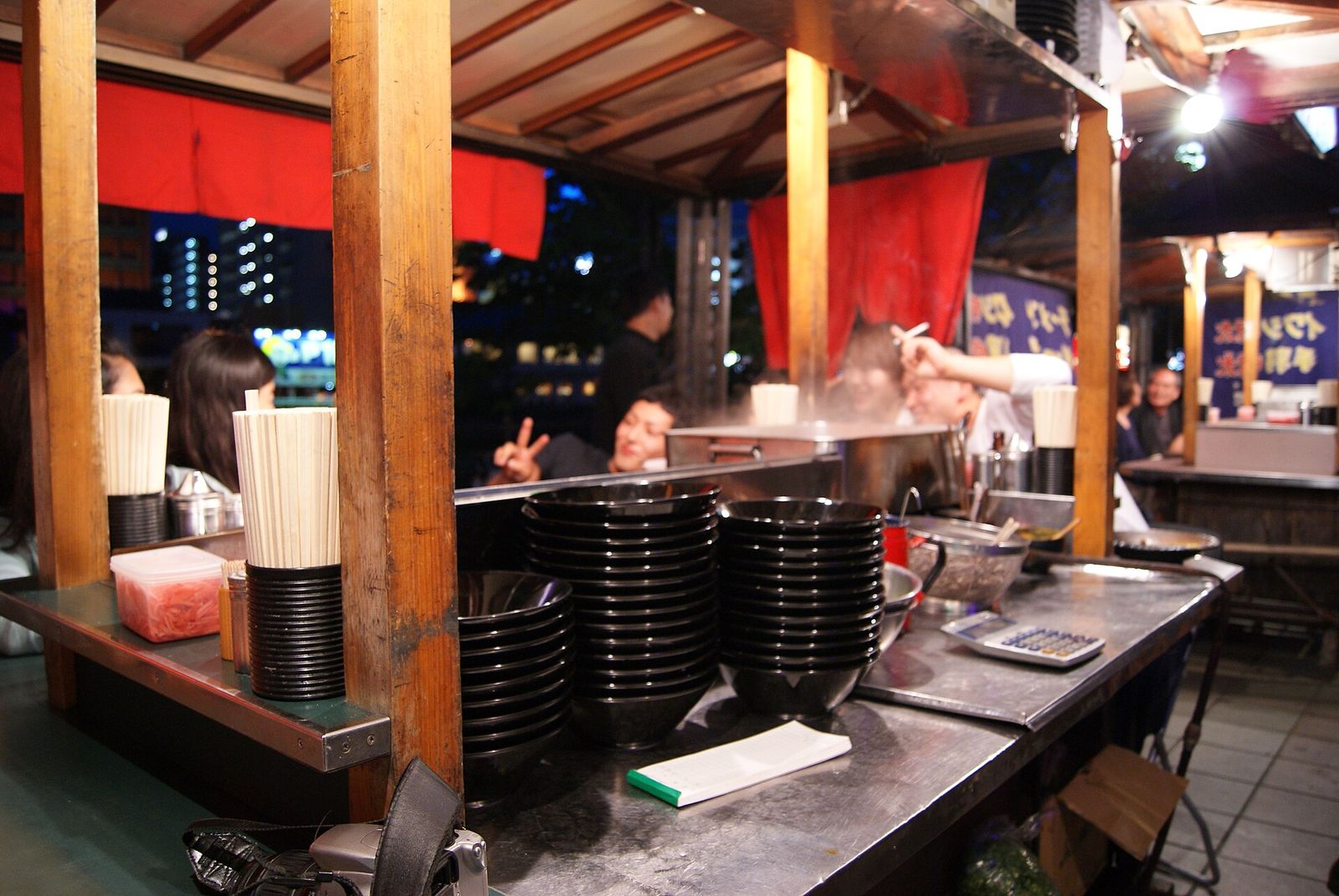
A yatai is a small food stall on wheels. The owner pushes it into place in the early evening, puts up a cloth roof, sets out about eight stools, and cooks until late. In the morning it is gone and the pavement is empty again.
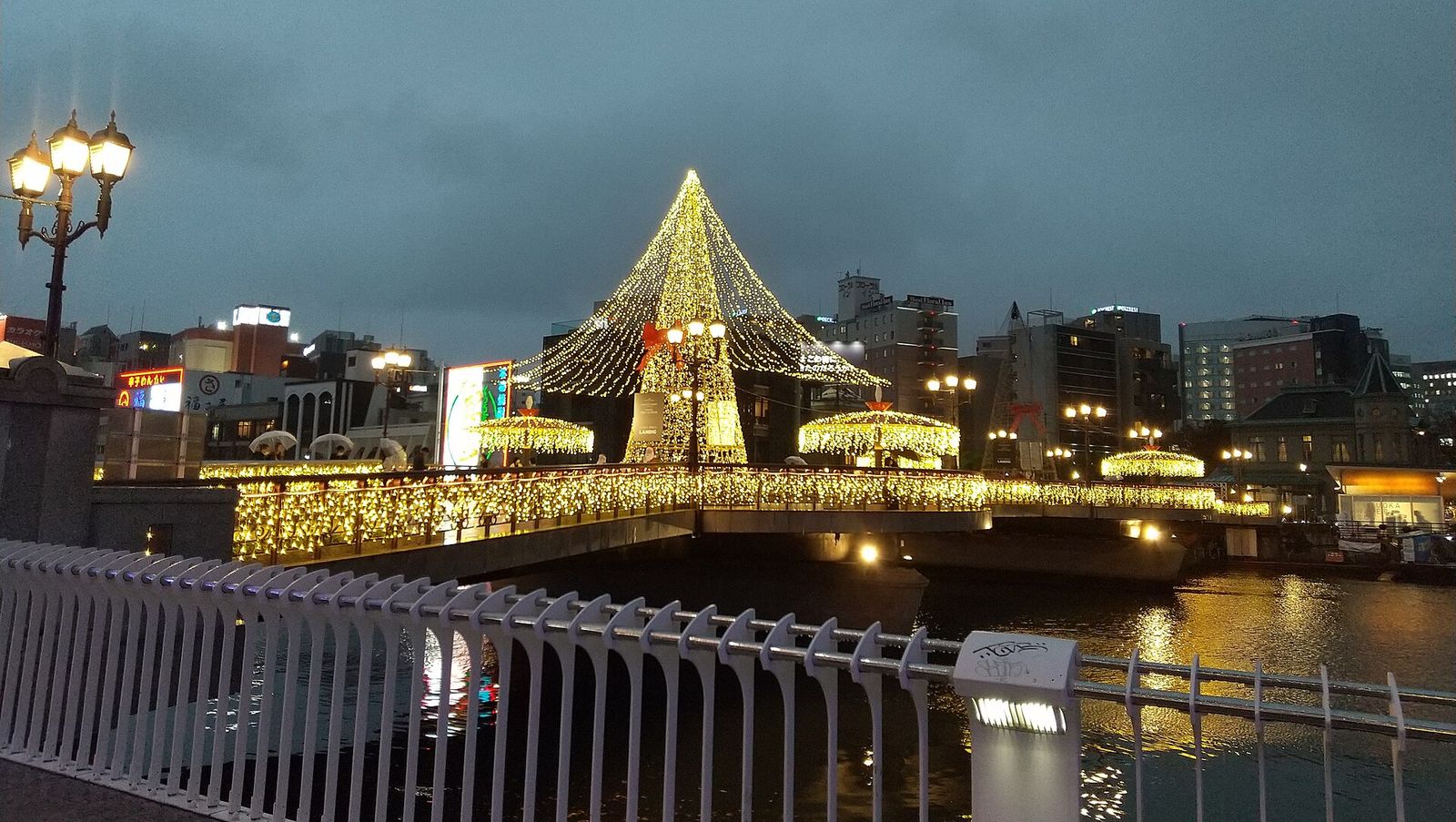
Fukuoka has more than 100 of them — more than the rest of Japan together. Nakasu, an island in the middle of the river, has the largest group.
Sitting down
This was the part I was nervous about. You cannot see inside from the street, the seats are close together, and there is no menu outside.
It turned out to be simple. You look for a stall with one free seat, you say sumimasen, and the owner points at the stool. That is all. Nobody minds that your Japanese is not perfect.
What I ate
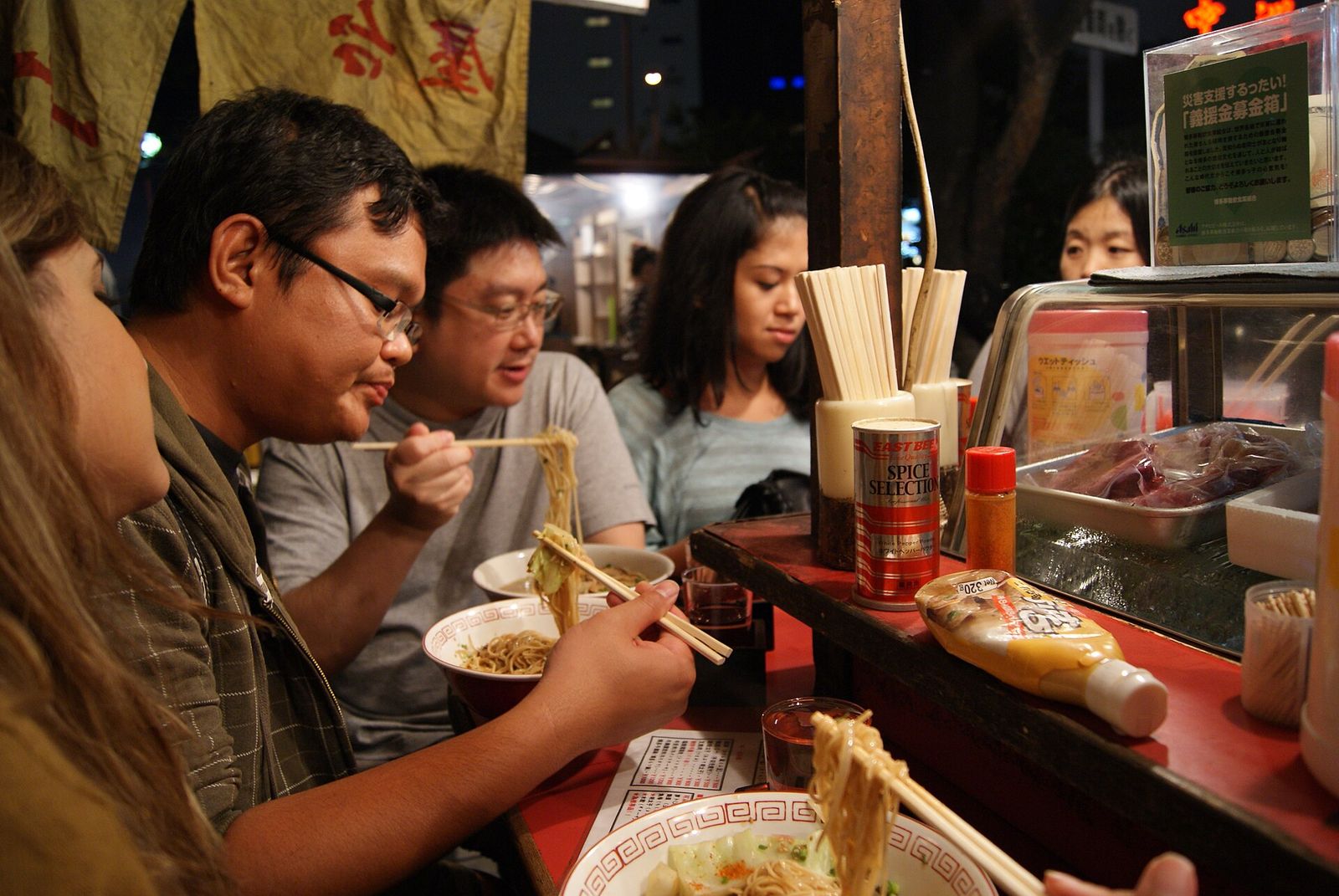
- Tonkotsu ramen — the Hakata style, made from pork bone, white and rich. The noodles are thin and straight. 700 yen.
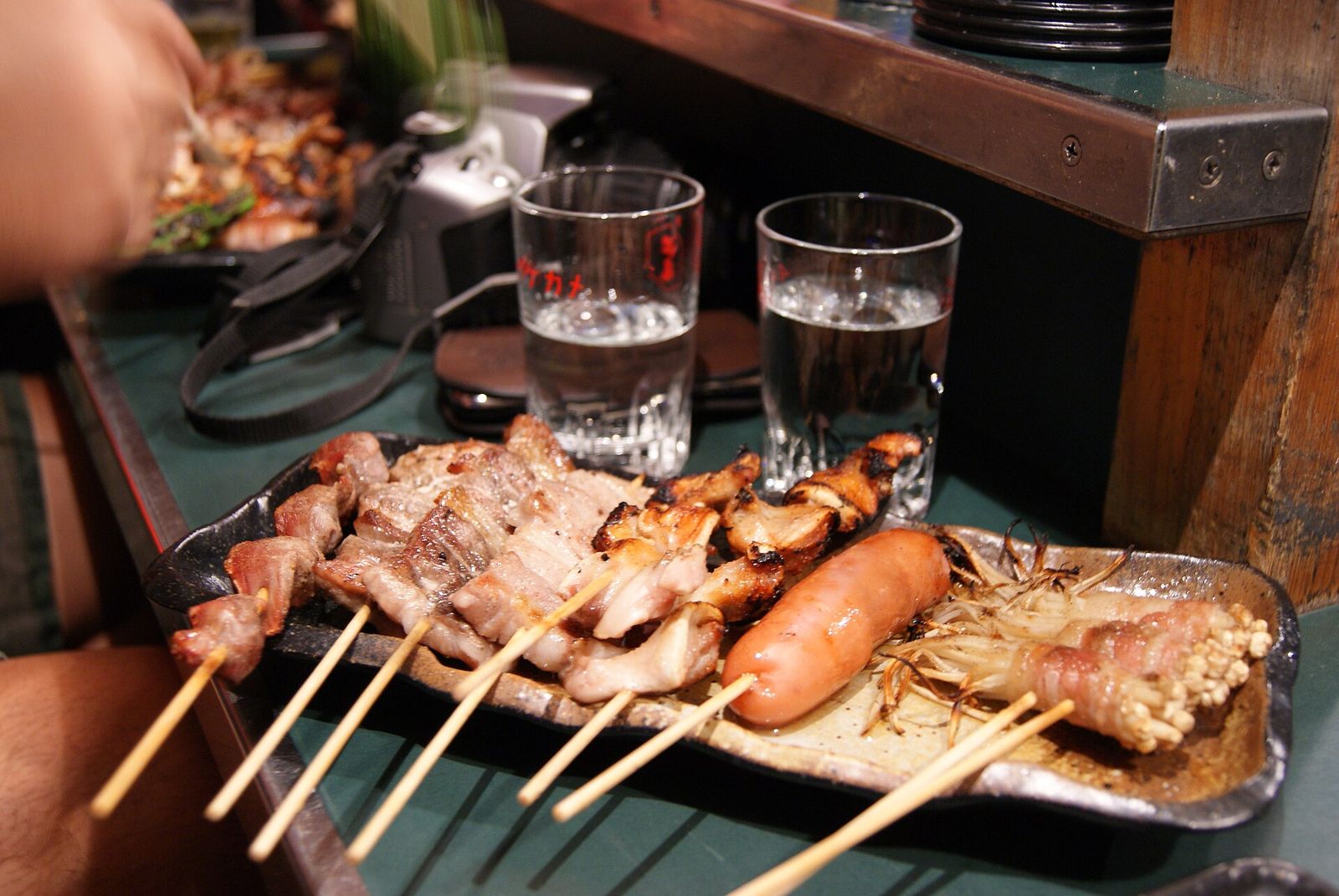
- Yakitori — grilled chicken on sticks, 150 yen each.
- Mentaiko tamagoyaki — rolled omelette with spicy cod roe inside. 600 yen. This was the best thing on the table.
- One beer, 500 yen.
If you finish your ramen and want more noodles, you can say kaedama and they give you a second portion for about 150 yen. You keep the soup.
The people
I sat between a man who worked at a bank and had clearly not gone home yet, and a couple visiting from Osaka. Within ten minutes we were all talking. The owner joined in while cooking. Nobody exchanged contact details and nobody expected to. It was just an hour of easy conversation with people I will never see again.
That is the real reason to eat at a yatai. The food is good, but you can get good ramen in a normal shop. You cannot get this.
Practical notes
- Stalls open around 6 pm and close around 2 am.
- Most are cash only.
- Expect to pay 2,000 to 3,000 yen per person.
- Some close in bad weather. If it is raining hard, have a second plan.
- There is no toilet. Go before you sit down.
Getting there
Nakasu-Kawabata Station on the subway. From Hakata Station it is two stops.
0 Comments
No comments yet — be the first.